
How Investors Use PAMM
Updated 7 months Ago
PAMM (Percent Allocation Management Module) provides investors with a convenient and efficient way to participate in financial markets by following professional fund managers, enabling structured capital allocation and performance-based returns.
Process Overview
Step 1: Registration

- Access the PAMM platform
- Select “Investor” as your user role

- Scroll to the bottom and click “Register Investor Account”
- Search for the desired fund manager using the account name
- Confirm the details and submit your registration
- Complete verification via the confirmation email
Step 2: Login
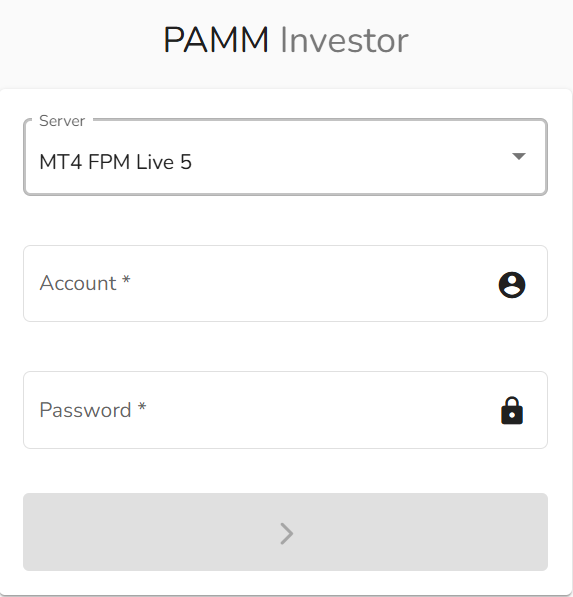
- Server: Select the appropriate server
- MT Account (Login): Enter your trading account ID
- Password: Enter your account password
- Navigate to the PAMM platform login page
- Select “Investor”
- Enter the credentials:
- Once logged in, you can manage your investments via the PAMM Portal
Step 3: Investment & Management
1. Create an Investment
- Select a suitable fund manager
- Create an investment account via the PAMM Portal
- Allocate funds to the manager’s PAMM account to begin participation
2. Daily Operations
Monitor Performance:
- Track the manager’s trading performance in real time
- View open positions, trading history, and account summaries
- Generate reports or subscribe to email updates
Fund Management:
- Deposit funds to increase investment exposure
- Withdraw profits or partially reduce capital
3. Account Management
Close Investment Account:
- Close the account when investment objectives are met
- Withdraw all allocated funds upon closure
Adjust Strategy:
- Rebalance investment allocation based on performance
- Choose between reinvesting profits or periodic withdrawals
4. System Features
Roll-over:
- Executed automatically every hour
- Synchronizes with MetaTrader 4/5 and updates account data
Reporting & Data:
- Access detailed trading reports and account analytics
- Data visibility may be configured by the administrator
Best Practices
- Evaluate the fund manager’s historical performance and risk profile
- Monitor investments regularly and adjust strategies accordingly
- Diversify capital allocation to manage risk effectively